
 BOSTON -- One of Dzhokhar Tsarnaev's former middle school teachers wrote on Facebook this week that "I still love him" even though the convicted Boston Marathon bomber "did the unforgivable." BOSTON -- One of Dzhokhar Tsarnaev's former middle school teachers wrote on Facebook this week that "I still love him" even though the convicted Boston Marathon bomber "did the unforgivable." It was the second time that Becki Norris spoke up for Tsarnaev, 21, on Wednesday. Earlier that day, the current Community Charter School of Cambridge principal testified in Tsarnaev's trial that when he was her seventh- and eighth-grade student, he was "a really hard-working, smart kid" with a seemingly bright future in front of him. Tsarnaev's life, of course, went in a vastly different direction than what Norris had forecast. He and his older brother, Tamerlan Tsarnaev, 26, detonated two bombs that killed three and wounded 264 others at the Boston Marathon on April 15, 2013, and days later killed a police officer across the Charles River in Cambridge. "Over the past two years, I've discovered the painful truth that when you care deeply for someone, that doesn't stop even if they do unfathomably horrible things," Norris wrote on Facebook. "Yes, he did the unforgivable. And yes, I still love him. And -- this one is hard to fathom, I know -- he still needs love." Her words qualified as a rare public display of support for Tsarnaev, one of the country's most vilified criminals. She sensed that many people might be puzzled by her position. "Ask yourself what you would think or do if someone you loved and cared about walked far, far down a deadly path," she said. Norris' entire message appears below beneath a photo of her notorious former pupil as a baby-faced youngster holding her newborn daughter. In at least one other example, a witness described on Facebook her intense feelings toward Tsarnaev -- though they were less complimentary. Bombing victim Rebekah Gregory shared a widely circulated letter denouncing Tsarnaev as "a coward" who wouldn't make eye contact with her while she testified in March about losing her leg from the attack. "[N]ow to me you're a nobody," Gregory wrote, "and it is official that you have lost." The defense team is trying to save Tsarnaev from the death penalty. After a jury convicted him on 30 charges on April 8, the trial entered the penalty phase in which the same jurors will either sentence him to be executed or imprisoned without the possibility of parole. The prosecution has already made its case for the death penalty. The defense has tried to convince jurors not to execute Tsarnaev, saying Tamerlan -- who died in a shootout with Watertown, Massachusetts, police -- was the mastermind of the bombing and coerced his younger brother into taking part. Lawyers for Tsarnaev put several of his other teachers in the witness box, as well as two friends from University of Massachusetts Dartmouth, where he'd faltered academically but maintained a reputation as kind and generous friend. Relatives flown in from Russia are expected to testify on Monday. Tsarnaev was one of the best students and athletes in the Cambridge charter school until his mother removed him because of a dispute about the school uniform, Norris testified. From the stand, Norris made eye contact with Tsarnaev and they even smiled at each other "He was already rightly found guilty. I testified to help the jury see why he might be spared the death penalty. I also hoped to show him, in spite of what he's done, that someone cares about him as a person," Norris wrote. "I don't expect to ever see him again. I will hold onto those moments, and I hope he does too." This is Dzhokhar, holding my daughter at 10 days old. He's known to many as the younger (and surviving) Boston Bomber.... |
Teacher Testifies So Dzhokhar Tsarnaev 'Knows That Someone Cares About Him'
South Korea Confirms NYU Student Is Detained In North Korea
 SEOUL, South Korea (AP) — South Korea confirmed on Sunday that North Korea detained a South Korean student of New York University, but said it was still unclear whether the 21-year-old New Jersey resident attempted to enter the North illegally. SEOUL, South Korea (AP) — South Korea confirmed on Sunday that North Korea detained a South Korean student of New York University, but said it was still unclear whether the 21-year-old New Jersey resident attempted to enter the North illegally.An official from South Korea's Unification Ministry, which handles affairs with North Korea, said his department was still trying to gather information on Won Moon Joo's travels and the circumstances of his arrest. "Our judgment is that Joo is being held in North Korea, but we are still trying to confirm the details of how he got arrested," he said on condition of anonymity, citing office rules. North Korea's official Korean Central News Agency said Saturday that Joo was arrested on April 22 after trying to illegally enter North Korea by crossing the Amnok River from the Chinese border town of Dandong. A spokesman for New York University, John Beckman, confirmed that Joo was a junior at NYU's Stern School of Business, but that he was not taking classes this semester and the university was unaware of his travels. He said the university was in touch with the U.S. State Department and the South Korean Embassy. North Korea has occasionally detained South Koreans, Americans and other foreigners, often on accusations of spying, in what analysts say are attempts to wrest outside concessions. In March, North Korea announced that it had detained two South Korean citizens over alleged espionage. It has been holding another South Korean man since late 2013 on suspicion of spying and allegedly trying to set up underground churches in the North. He was sentenced last year to life in prison with hard labor. Also last year, the North released three Americans — two of whom entered the country on tourist visas — and Kenneth Bae, a Korean-American missionary who was convicted of "anti-state" crimes. |
The Quest for Asia's Next Manufacturing Miracle
 As thousands of government, business and civil society leaders from across Asia descend on Baku, Azerbaijan for the annual Asian Development Bank meetings this weekend, countries in the region are consumed with how to sustain growth as some of the region's biggest economies -- China, Japan and Indonesia -- slow down. As thousands of government, business and civil society leaders from across Asia descend on Baku, Azerbaijan for the annual Asian Development Bank meetings this weekend, countries in the region are consumed with how to sustain growth as some of the region's biggest economies -- China, Japan and Indonesia -- slow down.Many Asian nations are turning to manufacturing as a way to fuel growth and create more, and potentially better quality, jobs -- especially for their bulging youth populations. Their resolve is strengthened by prospects of closer regional integration and trade agreements, such as the Trans Pacific Partnership. But newly emerging economies cannot use the 20th century success of Asian Tigers as a model. A 21st century manufacturing miracle calls for a different strategy. Today, global competition is fiercer than ever. More countries are playing the manufacturing game, and Asia's more developed economies, such as China, are already formidable players, having claimed their stake in elaborate supply chains. Developing and emerging economies accounted for 32 percent of global manufacturing value-added in 2010. Of this, Asia-Pacific countries accounted for 21.7 percent, with China's share at 15.3 percent in 2010. Countries like China and South Korea rode the wave of economic liberalization and the revolution in information and communication technologies to transform their manufacturing sectors. For emerging economies now embarking on the same path, there is no watershed economic reform or revolutionary technology that they can leverage to enter an already competitive landscape. What's more, weak aggregate demand in developed economies throws up another barrier to export-led growth. So, what will it take for a country like India -- which launched its "Make in India" campaign last autumn -- or Myanmar -- the world's newest frontier market -- to become an industrial powerhouse in the 21st century? Asian leaders in newly emerging markets must continue to prioritize the fundamentals -- attract capital and technological investment and improve infrastructure -- while also diversifying their manufacturing sectors, skilling their workforces, and enabling a healthy industrial relations system. Massive deployment of labor in one low-skilled sector like garments may have kick-started industrial revolutions in 20th century Asia, but such a strategy is now outdated. For one, diverse economies are more resilient in the face of economic shocks. Moreover, lack of diversity produces an oversupply of labor in one sector, depressing working conditions and wages. It is unsurprising then that in Bangladesh, where 80 percent of exports come from a single industry (garments), wages and working conditions are among the worst in the world. Countries with a diversified manufacturing sector tend to offer higher wages and clearer pathways of upward mobility for workers. Better-paid, economically mobile workers promote domestic consumption, further expanding opportunity for businesses and reducing dependence on exports. But diversification can only happen if countries make significant investments in upgrading the skills of their workforces. In some of Asia's most ambitious emerging economies, the percentage of the labor force that is formally trained remains extremely low: only 2.2 percent of Cambodian and 6.4 percent of Vietnamese students in secondary schools are receiving vocational education. Policymakers in Asia must also focus on building a well functioning industrial relations system. In many newly emerging economies, the proliferation of thousands of unions has muddled workers' voices. Countries should encourage the development of large, legitimate trade unions that truly represent workers' interests and engage productively with employers, rather than stamping out strikes in the fear that they will drive away business. Governments, business and civil society must work together to create an Asian model of German codetermination -- where employers and employees negotiate fairly and unions hold seats on corporate boards. In their quest for the next manufacturing miracle, leaders of newly emerging Asian economies have an opportunity to fashion a new, 21st century economic model for the continent -- one based on a diverse manufacturing sector, a skilled workforce, and a new deal between business and labor. -- The JustJobs Network is a global think tank focused on finding evidence-based solutions to global employment challenges. It hosted a seminar at this year's ADB meetings entitled, "From Factory Floor to the Middle Class: Does Labor-Intensive Manufacturing Promote Economic Mobility?" Sabina Dewan is Executive Director of the JustJobs Network and Senior Fellow at the Center for American Progress. @sabinadewan Gregory Randolph is Deputy Director of the JustJobs Network. @justjobsproject |
Merkel Says Germans Can Never Forget Horrors Inflicted At Nazi Death Camps
 DACHAU, Germany, May 3 (Reuters) - Germans will never forget the "unfathomable horrors" that the Nazis inflicted at the death camps, Chancellor Angela Merkel said on Sunday at a ceremony marking the 70th anniversary of the liberation of the Dachau concentration camp near Munich. DACHAU, Germany, May 3 (Reuters) - Germans will never forget the "unfathomable horrors" that the Nazis inflicted at the death camps, Chancellor Angela Merkel said on Sunday at a ceremony marking the 70th anniversary of the liberation of the Dachau concentration camp near Munich. In a moving speech to 120 elderly survivors from 20 nations and six U.S. soldiers who helped liberate the camp, Merkel said Dachau and other death camps freed near the end of World War Two stand as eternal reminders of the Nazi regime's brutality. "These former concentration camps have come into public focus in recent weeks with the passing of the 70th anniversaries of the liberation of one camp after another," Merkel said in a somber ceremony at Dachau, now a memorial with 800,000 annual visitors. "There were unfathomable horrors everywhere," said Merkel, who in 2013 became the first German leader to visit Dachau. "They all admonish us to never forget. No, we will never forget. We'll not forget for the sake of the victims, for our own sake, and for the sake of future generations." The Nazis set up Dachau in March 1933, weeks after Adolf Hitler took power, to detain political rivals. It became the prototype for a network of camps where 6 million Jews were murdered, as well as Roma, Russians, Poles and homosexuals. More than 200,000 people were being held in the camp when U.S. troops liberated it on April 29, 1945. Television footage from Dachau, showing starved inmates and piles of bodies, was among the first images the world saw of the Holocaust. "It was a terrible shock, but we will never forget your excitement as you hugged us and brought out a hand-sewn American flag you hid for the occasion," said a former U.S. soldier, Alan Lukens. "The Nazis could not crush your spirit." Jean Samuel, a French resistance fighter, said he felt like a human again on the day the Americans arrived. "It was the best day of my life," he said. "The nightmare was finally over." The main gate with its cynical slogan "Arbeit macht frei" (Work sets you free) was rebuilt by a local blacksmith after the original was stolen last year. Merkel said it was alarming that the gate was never found. She also lamented that Jewish institutions need round-the clock police protection in Germany. "These camps keep our memories alive, despite all the adversity out there," Merkel said. "There are unfortunately incidents again and again such as the theft of the Dachau gate last year that are disturbing." In a recent opinion poll, some 42 percent of Germans said they want to draw a line under an intense focus on the Nazi past in German media. (Writing by Erik Kirschbaum in Berlin; editing by Jane Baird) |
Meet The Little-Known Artist Who Inspired Walt Disney's 'Bambi'
 A lone deer stands on a windswept mountain. Though the setting is fresh with spring blooms, he looks still -- almost pensive, like the human figures overwhelmed by nature in so many Romantic paintings. A lone deer stands on a windswept mountain. Though the setting is fresh with spring blooms, he looks still -- almost pensive, like the human figures overwhelmed by nature in so many Romantic paintings. It's the work of Tyrus Wong, a Chinese immigrant and WPA artist whose work served as the aesthetic inspiration for Walt Disney's second feature-length animated film, "Bambi." The somber nature of the scene makes sense when taking Wong's lonely upbringing into consideration. He travelled to America in 1919 with his father from Guangdong, China, but due to the Chinese Exclusion Act of 1882, was detained for nearly a month upon arrival. He went on to work as a Depression-era muralist in Los Angeles, funded by the Works Progress Administration, and a film production illustrator for Warner Brothers from 1942 to 1968.   It was in '42 that his work caught the eye of Walt Disney, eventually inspiring the look of Bambi. According to the Museum of Chinese in America, where Wong's work is currently being shown, his "impressionistic art influenced the movie's overall visual style and changed the way animation art was presented." "'Snow White' preceded 'Bambi' and was stylistically much different. The forest in 'Snow White' was ornately detailed, down to depicting every leaf on trees. It seemed as though Walt Disney was struck by the elegant minimalism of Tyrus's interpretations of the forests in 'Bambi,'" Herb Tam, the museum's director of exhibitions, told The Huffington Post. "Wong imagined a highly expressive forest, defined more by gestures, bold color schemes and suggestions of light."   Wong's earlier work used traditional Chinese calligraphic techniques to depict the people living around him in Los Angeles. "This bold outlining," Tam explained, "is reflected especially in how Tyrus handled trees within 'Bambi.'" Wong described his later work as representing "loneliness, and a little sadness. Isolation." Such themes can be seen in the serene forests he painted for Disney, too, with lone deer dodging fires, and standing proudly on hilltops. Tyrus Wong's work will be on display at the Museum of Chinese in America from March 26 to Sept. 13, 2015. For more on the art that inspired Disney films, check out ourpast coverage of Mary Blair. |
#EmojisInTheWild Is Taking Over Instagram
 For nature fiends, a glimpse of a rare Black Rhino or an endangered Sumatran Orangutan is the stuff dreams are made of. For lovers of the wild terrain that is the Internet, however, we get our kicks from seeing Prayer Hands IRL. For nature fiends, a glimpse of a rare Black Rhino or an endangered Sumatran Orangutan is the stuff dreams are made of. For lovers of the wild terrain that is the Internet, however, we get our kicks from seeing Prayer Hands IRL. May we introduce you to #EmojisInTheWild, the hashtag that's taking Instagram by storm, tagging rare shots of the elusive Eggplant, the mysterious Twin Ballerinas and the infamous Vanilla Ice Cream Cone. (And, before you ask, no one has yet sighted a Smiley Poop.)
Yup, believe it or not, people are actually taking photographs of real life emoji Dislikes (thumbs down) and actual, non-digital emoji Pineapples (a pineapple). It's almost as if the real world was transforming itself into a simulacrum of the emoji world. What is real?! Put on your safari hat and take a look at the many strange and colorful breeds of emoji making their way out of the screen and into real life below. Oh, and did we mention you can hashtag emoji now? #
|
7 Netflix Documentaries Worth Streaming
"Fed Up" "Fed Up" is as infuriating as it is eye-opening. Advocacy documentaries tend to be a bit short-sighted, reveling in their self-righteousness, but director Stephanie Soechtig has more than enough facts to avoid resting on pure outrage. Consider that, since the '80s, the number of overweight children has gone from one in 20 to one in five. And while entire industries have ignited over weight loss, the number of those struggling to shed pounds only grows. "Fed Up" reveals the complex ways in which the government is inadvertently subsidizing the obesity epidemic through food lobbies. It guts the myth of personal responsibility (emphasized by the rhetoric of "eat more, exercise less") and gets to the cause of our growing waistlines: processed food that has no nutritional value and ever-increasing helpings of added sugar.  "Whitey: United States of America v. James J. Bulger" James "Whitey" Bulger is one of the most notorious gangsters of all time. At one point in his career of crime, he joined Osama Bin Laden on FBI's Most Wanted List. In his notorious 2013 trial, he was accused of 33 crimes, including the alleged murders of 19 people, but Bulger had no interest in proving he was innocent; he just wanted to set the record straight that he was not a snitch. "Whitey" works through the issue of whether he was an informant, weighing both sides to look at not just Bulger's legacy, but the depth of corruption inherent in federal law enforcement. (Note: You'll especially want to watch this one if you plan to see "Black Mass," Johnny Depp's Whitey biopic.) 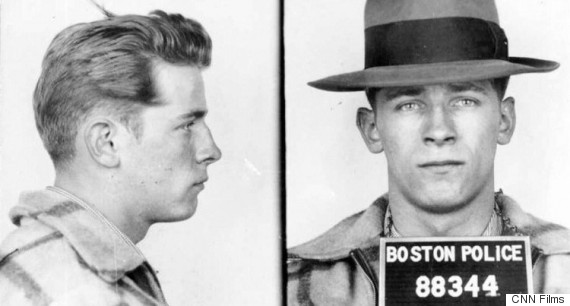 "Tricked" "Tricked" ends with a startling statistic: "More people are enslaved today than at any point in history." There are 20.9 million victims, more than the populations of New York, Chicago, Miami, Houston and Los Angeles combined. Directors Jane Wells and John Keith Wasson set out to establish this lesser-known reality, that often the relationship between a prostitute and her pimp is not a business transaction, but form of human trafficking. In a tone that is more informative than hard-hitting, they explore different facets of the $3 billion industry, the ways by which it is perpetuated and how it can stopped. 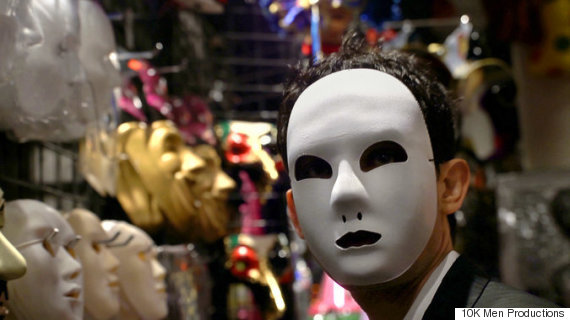 "Showrunners" "Showrunners" can feel a bit insider-y, like the director's cut that might come with a collector's edition box set. Still it makes for an interesting look at the way the relatively new position of showrunner has fueled the so-called golden age of TV. The talking heads -- including everyone from Joss Whedon ("Buffy The Vampire Slayer") to Michelle and Robert King ("The Good Wife") -- give a look at the behind-the-scenes intersection of creativity and commerce that leads to successful programming. (Note: This one is probably best for film students or TV mega-nerds. Anyone else would be more likely to enjoy 90 minutes spent watching one of the many acclaimed shows the cast of "Showrunners" has created.)  "Winnebago Man" In a way, "Winnebago Man" was one of the original viral videos. It was shared and copied on VHS tapes, long before it spread with the rise of Youtube in 2005. Director Ben Steinbauer was one of those early fans of Jack "Winnebago Man" Rebney, which led him to track down the so-called "angriest man in the world" and see how the spread of the outtakes from Rebney's commercial had affected him all these years later. "Winnebago Man" is irreverent and beautiful all at the same time, with a bit of seriousness as Steinbauer zooms out to look at the way the mass "tar and feathering" of this new kind of celebrity has changed his subjects' lives.  "Love Me" "Love Me" takes on the "mail-order bride" industry as it thrives in the Ukraine. Director Jonathan Narducci follows several men looking for a wife overseas after they feel they've exhausted their options with local dating. Although the popular conception is that these arrangements are meant to satisfy the men, many of the women depicted are eager to find a match and build a family -- something hard to do given the 87 to 100 female-to-male ratio in the Ukraine. (As one of the suitors put it, "These women believe family first. Not career first, family first. It's like dating a girl in the '50s.") The mixers build into a strange combination of two very different types of desperation, perhaps more fittingly matched than any of the pairs that find their way together over the course of the film.  "I Am Divine" This glimpse into the life of the man who became Divine peels back the boundary-pushing sexiness and menace of the iconic character. Director Jeffrey Schwartz unpacks Divine's talent from its origins in the experiences of Harris Glenn Milstead to her work as John Waters' muse. At a time when the closest thing to a gay scene was underground (and even illegal), Divine dared to be a movie star, and one of the most mesmerizing at that. "I Am Divine" is a loving look at her legacy and the unique power of those who dare to be themselves (and/or eat dog poop on screen.) 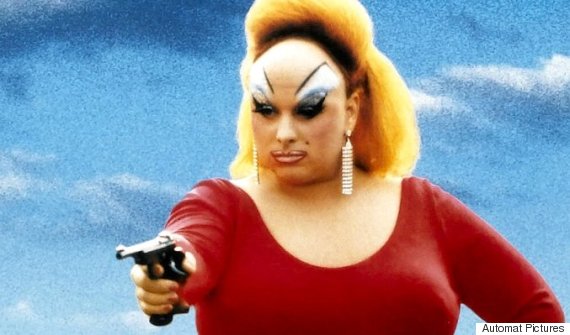 |
Langganan:
Postingan (Atom)


