
 A man wanted in connection with the killing of Kremlin critic Boris Nemtsov took his own life on Saturday. A man wanted in connection with the killing of Kremlin critic Boris Nemtsov took his own life on Saturday.According to Russia's Interfax news agency, Beslan Shavanov, 30, was holed up in an apartment building in Grozny. When police arrived on the scene, he threw a grenade at officers and then blew himself up with a second one, Reuters reported. Shavanov's death occurred as Russian authorities reportedly arrested five other people believed to be involved in the Nemtsov slaying. Two of the suspects, including a former police officer, were formally charged on Sunday, CNN reported. Three other men "remain under the status of suspects," court spokeswoman Anna Fadeyeva told Sputnik, and were ordered by the judge to remain in custody. All appear to have Chechen connections, The Daily Beast reported. Nemtsov, a 55-year-old former deputy prime minister and one of Russian President Vladimir Putin's most outspoken critics, was shot and killed on Feb. 27 while walking with his girlfriend across a bridge near the Kremlin. The killing came just hours after Nemtsov gave a radio interview and urged Moscow residents to join an opposition rally to protest Putin's handling of Ukraine and the country's economic crisis. Tens of thousands ended up attending the rally, The Associated Press reported, and used the event to mourn his death. Nemtsov's girlfriend, 23-year-old model Anna Duritskaya, was the sole witness to the attack. She has been receiving death threats since Nemtsov's slaying and is now receiving government protection.
|
Beslan Shavanov, Man Wanted In Connection With Boris Nemtsov Killing, Reportedly Takes His Own Life


36 Influential Women Tell World Leaders: Poverty Is Sexist

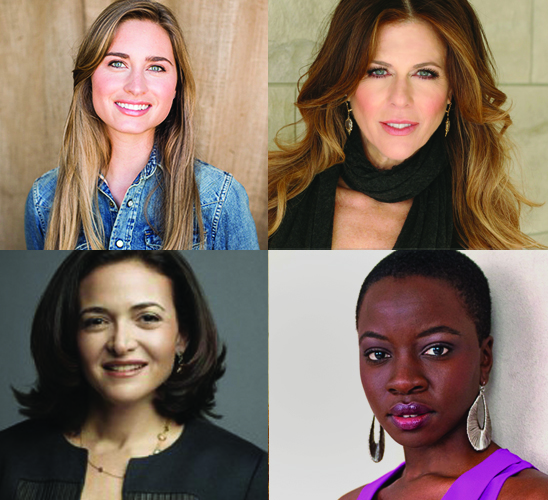 Some of the world's most prominent and credible female voices -- including Beyoncé, Meryl Streep, Lady Gaga, Sheryl Sandberg, Charlize Theron, and Angelique Kidjo -- have a VERY important message about the girls and women of the world. ONE asked a group of women business leaders, artists and activists to join us to send a message to two world leaders who could help put the world on track to end extreme poverty, by empowering girls and women everywhere. German Chancellor Angela Merkel and South Africa's Minister of Health Nkosazana Dlamini-Zuma host key summits this June, which could set us on a path to smart new Global Goals that will can unleash girls and women's true potential. These two politicians will hear direct from this great group of influential women -- and ONE members around that world -- that the time for girls and women is now. Read their letter, then join ONE and take action for girls and women: Dear Chancellor Merkel and Chairwoman Dlamini-Zuma, Thank you for your leadership and the example you offer all girls and women. In June this year you will both chair key summits at which you have placed women's empowerment on the agenda -- one in Germany, one in South Africa. These meetings are just before the historic global summit on how to finance the new Sustainable Development Goals in Addis Ababa, which will be followed by the unveiling of these goals in New York in September. The timing is such that if your summits reach the right agreements, great financing and momentum around girls and women's empowerment can be placed at the heart of the new global goals. That in turn will frame how global policies are decided, and trillions of dollars spent, over the next 15 years. For the girl who can't go to a decent primary or secondary school or access healthcare, or who is forced to marry while still a child; for the mothers threatened with death when they give life and who aren't allowed to decide when to have their next child; for the women who can't own or inherit the land she farms, nor open a bank account, own a phone, access electricity or the legal system; for the infant girl who doesn't legally exist because her birth wasn't registered and the government hasn't the capacity to collect data on her or her village; for the women and girls who can't take those who are violent towards them to court nor access justice -- let's make sure they all count. Put simply, poverty is sexist, and we won't end it unless we face up to the fact that girls and women get a raw deal, and until leaders and citizens around the world work together for real change. Because when we deliver for girls and women, we deliver for everyone. Realizing women's rights helps deliver everyone's rights. If we get this right, we could help lift every girl and woman out of poverty by 2030 -- and by doing so we will lift everyone. Get this wrong and extreme poverty, inequality and instability might spread in the most vulnerable regions, impacting all our futures. The choice is obvious and we know where you stand personally. But the course you set as leaders in this historic year will be critical in either creating momentum or slowing it down. In 2015 let's all have the courage to demand better and follow through with the resources and policies that it will take to end extreme poverty by 2030. Millions of girls and women around the world will applaud your decisiveness -- and will help ensure the promises made this year are truly kept into the future. Signed: Ali Hewson, Founder, Edun and Nude Angelique Kidjo, Singer, Songwriter and Activist Angellah Kairuki, Member of Parliament (Tanzania) Ann Cairns, President, International Markets, MasterCard Arianna Huffington, Chair, President, and Editor-in-Chief of the Huffington Post Media Group Beyoncé Knowles-Carter, Entertainer and Entrepreneur Charlize Theron, Actress, UN Messenger of Peace, Founder of Charlize Theron Africa Outreach Project Christy Turlington Burns, Founder, Every Mother Counts Cindi Leive, Editor-in-Chief, Glamour Magazine Danai Gurira, Actress, Playwright and Activist Gesine Schwan, Professor and Former Presidential Candidate Helene Gayle, President and CEO, CARE Jude Kelly, CBE, Artistic Director, Southbank Centre Jutta Allmendinger, Professor and Ph.D., President of the Wissenschaftszentrum Karen Kornbluh, Senior Fellow, Council on Foreign Relations* Karen Ruimy, Musician, Performer and Author Lady Gaga, Singer and Songwriter Lauren Bush Lauren, Founder and CEO, FEED Mabel van Oranje, Initiator and Chair, Girls Not Brides: The Global Partnership to End Child Marriage Dr. Maria Furtwängler, Actress and Physician Marian Salzman, CEO, Havas PR Mariella Frostrup, Journalist and Cofounder of GREAT Initiative Meryl Streep Michele Sullivan, President and Director of Corporate Social Innovation, The Caterpillar Foundation Mimi Alemayehou, Development Finance Executive Monica Musonda, CEO and Founder of Java Foods (Zambia) Mpule Kwelagobe, Activist Naisula Lesuuda, Senator (Kenya) Rita Wilson, Actress, Producer and Singer Rosamund Pike, Actress Sabine Christiansen, Journalist, Producer and UNICEF-Ambassador Sarah Silverman, Comedian, Actress and Activist Sheryl Sandberg, COO, Facebook Sheryl WuDunn, Banker and Author Susan Shabangu, Minister of Women's Affairs (South Africa) Yvonne Chaka Chaka, President of the Princess of Africa Foundation, Activist and Singer Stand with girls and women everywhere
|


Here's How We Can Achieve Social And Economic Gender Equality By 2030

 The U.N. admits that the road to gender equality has been "slow" and hampered by regression. But it has committed to accelerating its efforts in order to meet its new 2030 deadline. The U.N. admits that the road to gender equality has been "slow" and hampered by regression. But it has committed to accelerating its efforts in order to meet its new 2030 deadline. U.N. Women unveiled a campaign on Friday that's urging countries to commit to achieving equal rights for women within the next 15 years. The "Step it Up" initiative tasks world leaders and governments with implementing laws and policies that will put women on equal footing with men in the areas of social, economic and environmental development. "Creating a world with greater equality for generations to come is the defining and most urgent challenge of this century," Phumzile Mlambo-Ngcuka, executive director of U.N. Women, said in a statement. "Gender equality and the realization of women's and girls' human rights are fundamental for achieving human rights, peace and security and sustainable development." The initiative was timed to coincide with International Women's Day and the 20th anniversary of the Beijing Declaration and Platform for Action. When that plan was put forth, advocates at the time had "high hopes" for putting an end to human rights violations against women, but it has fallen short, Mlambo-Ngcuka said in a taped statement. In its exhaustive analysis of how women have fared over the past two decades, U.N. Women outlined how progress has been "uneven" and what it will take to establish gender equality. The report pointed to a number of areas that have shown some promise. Girls' enrollment in primary and secondary education has improved, for example. Maternal deaths have dropped. Women's participation in the labor force has increased. In some regions, incidents of such harmful practices as female genital mutilation and child marriage have declined. Even these victories, however, are tenuous because they are threatened by rising extremism, deep-seated discriminatory norms and stereotypes. Such systems have allowed plaguing human rights abuses against women, which in some areas are worse now than they were when the Beijing plan was put forth, to persist. In all regions, the rate of violence against women in disturbingly high, with 35 percent of women having experienced physical and/or sexual assault. Globally, young women have a 50 percent higher risk of becoming infected with HIV, compared with their male peers. Women are also more likely than men to live in poverty. Women's earning potential remains compromised, especially in developing countries. In Africa, for example, 70 percent of crop production depends on women, yet women own less than 2 percent of the land. "The overall picture is of slow and uneven implementation, with serious stagnation and even regression in several areas," Mlambo-Ngcuka wrote. "Progress has been particularly slow for the most marginalized women and girls who experience multiple and intersecting forms of discrimination." While the U.N. is putting the pressure on world leaders to take a stronger stance, a number of inescapable crises stood in the way of developing meaningful progress. Persistent conflicts, financial and economic crises, volatile food and energy prices, and climate change have deepened inequalities and have adversely affected women and girls, according to the U.N. report. But the U.N. is focusing its efforts on addressing cultures of violence, masculinity and militarism. To get there, the organization has first asked countries to definitively commit to making gender equality a priority. U.N. Women envisions those commitments succeeding, though, on the community level with "context specific" strategies. It wants to see media campaigns mobilize communities to reject violence against women. U.N. Women recommends fostering gender-responsive environments in schools, which would involve separate and safe sanitation facilities and addressing violence against girls. Policies could remedy discriminatory inheritance practices and improve women's access to resources. U.N. Women has also impressed the need to address data gaps in order to effectively monitor progress toward gender equality. "No country has achieved gender parity, despite the many good laws that have been passed," Mlambo-Ngcuka said in a taped address. "This means that we cannot continue in the same way and expect far-reaching changes. Business as usual will erode the gains we have made, so we have to step it up."
|


Langganan:
Postingan (Atom)


